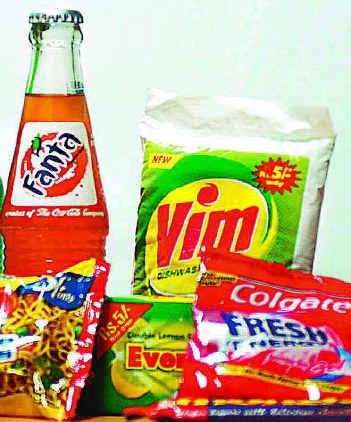
In times like these when consumers don’t come easy and loss of revenue is easier done than said, some Indian retailers have been smart enough to deploy a strategy that allows them to manoeuvre shoppers’ impulses even as customers undertake pre-planned shopping trips. In times like these when consumers don’t come easy and loss of revenue is easier done than said, some Indian retailers have been smart enough to deploy a strategy that allows them to manoeuvre shoppers’ impulses even as customers undertake pre-planned shopping trips.If one thought that the key to success for any retail business in India lay in inflating the number of stores, better supply chain management, technology deployment and such incomprehensible jargons, there is something more subtle that has been evident all across, yet has evaded our eyes because we never realised our shopping may have been manipulated by the retailer. Cross merchandising is a practice that works on the principle that there is an element of lateral thinking and logic in a consumer’s purchase, and thus this technique can be made use of not only to make shopping more convenient for the existing customer base, but also to poach a new set of consumers. While to a retailer, such a practice leads to incremental sales, for the consumer it is shopping assistance without much cognitive effort. Sample the instance of cross-selling, (which though differing from cross merchandising follows the same marketing principle) at McDonald’s, when consumers are unfailingly asked if they want French Fries and a beverage to go along with their order. Deploying lateral thinking, cross merchandising is thus based on the concept of lateral marketing, which is a work process which, when applied to existing products or services, produces innovative new products and services that cater to new needs and situations and hence, offers a high chance of creating new categories or markets. Defining cross merchandising from a retailer’s perspective, Samar Singh Sheikhawat, VP, marketing of Spencer’s Retail says, “Typically complementary products that make up similar buying behaviours for the consumers are defined as cross merchandising. It could straddle displaying and selling a product, promoting a basket of goods and visual merchandising as well.” An extremely interesting characteristic of this practice is that it is intricately related to studying shopping behaviour and adapting merchandising of retail stores as per demands of the catchments. However, the technique also works backwards in that a retailer can educate his consumer as to what all additional products can go along with his usual basket of goods. Viney Singh, MD of Max hypermarkets explains: “Cross merchandising is the practice of displaying products from different categories together, which is aimed at improving the overall customer experience. Hence, we provide such opportunities to the customer to primarily facilitate convenience while shopping. It also generates additional revenue or incremental purchase.” “A customer may not always remember every item on her shopping list and so a little prompting always helps. Hence, cross-merchandise is a very important aspect of retail, both from the customer journey experience as well as from the retailer’s financial viability. It creates a win-win situation for both the retailer and the customer.” Thomas Varghese, CEO of Aditya Birla Retail Limited corroborates, “Cross merchandising is the setting up of displays of complementary merchandise so that they are placed near each other. Therefore, the customer shopping for one item gets tempted to ‘cross-over’ to other related product placed near it. It is definitely a powerful medium to boost sales, if deployed correctly.” Having said that, cross merchandising is a tool that works across categories, but in the process of execution, not every category turns out to be so convenient to cross-present. For instance, in the frozen foods category, there are operational issues that factor in because this segment is highly ‘equipment-dependent’ and this is compounded by the space constraints that many modern food retailers face. Singh states that in this category (frozen foods) it becomes difficult to display the frozen foods’ complementarities along with the refrigeration units where these foods are stored. While there is substantial unanimity in retailers’ views on the frozen foods segment, there is also subjectivity in the way a retailer perceives the difficulties in cross-presenting different categories.
Sheikhawat says that largely all categories are feasible for this practice; however, it is the staples section that is a mite tricky to display in a visually attractive manner. “It is very difficult to bring in the elements of aesthetics and glamour, for instance, in a rice shelf. At best, there is a possibility of putting it together with certain utensils like a rice plate or a storage container, but that still does not really prevent it from looking drab,” he says. “All categories generally offer some promise to cross merchandise. It is most often the extent that varies,” says Singh. “For instance, in the range of utensils, most SKUs can be cross merchandised, but the same cannot be said for luggage, which is a difficult category in which to do this. Most foods are crossed with general merchandise but due to space constraints, it becomes physically impossible to display the merchandise properly.” Varghese informs that for him, health and baby food supplements are most difficult to cross-merchandise. “In ‘planned-shopping’ categories like fruits and vegetables and staples etc, it gets tough to cross-present as the customers who come to shop for these categories have a pre-set shopping plan and a budget that has limited flexibility. This concept does really well in impulse purchase items,” he notes. Impulse planning While it is largely considered that cross merchandising is more effective in triggering impulse purchases, there are varying opinions on the same. Worldwide, and as Sheikhawat also mentioned earlier, this practice is an integral part of in-store merchandising since it is proven to be a tool for boosting incremental sales. The technique has been a rage among all the retail stores in the west as the motive has been to maximise the gross profit per shopper. “Cross merchandising is fundamental to retail, and boosts incremental sales and impulse purchases. However, one should be careful to the extent and the way in which it needs to be done. This is very important as consumers may get confused if it is overdone,” Singh says. “Cross merchandising is not limited to tapping impulse purchases only – it helps to give ideas to consumers. They are then free to choose from a range of products that the cross merchandise represents.” Singh informs that the kitchen linen category at Spar recorded a 22 per cent increase in sales owing to it being cross-presented with kitchen utensils. “This is a form of ‘suggestive selling’ and often it creates a thought process that may not have existed in the customer’s mind previously. This often then translates into planned purchases,” Singh states. Elaborating on the practice at More stores, Varghese says, “We use different permutations and combinations of presenting snacks and beverages, sweeteners with tea and coffee, noodles with soups, oils with wheat flour, rice with flour, sugar with rice and, oils with fruits and vegetables, etc.” “Broadly, the categories we do this (cross-merchandise) in at Spar are utensils, kitchen linen, travel, toys, stationery, small appliances and in a more limited way in food and grocery,” Singh elaborates. “We are currently applying the practice by cross merchandising between and within various non-food categories like utensils with kitchen Linen or Irons with Ironing Boards, cookers and non stick with grinders and mixies, buckets with detergents, cartoon mugs with children’s gifts, lunch bags with lunch boxes /water bottles, note pads with telephones and bath towels and bath salts/oils,” he adds. “The direction will be to smartly cross merchandise between food and non-food categories, something we have begun to do. For instance, apples and pairing knives, toys and batteries, wines with glasses, cheese with cheese boards and knives, peppermills with peppercorns, and so on.” Some more examples in the food & grocery categories are sauces, mustards and spices being merchandised at Spar delicatessen counters, syrups, toppings, masalas in the frozen foods segment, the pet food category placed next to garden plants, snacks & cold beverages in the liquor section, wine glasses in the wine section, and masalas and dry fish in the fresh fish & meat counters, according to Singh. What’s the right cross? After seeing the differences in the extent of cross merchandising at India’s leading retail stores, the next issue that comes to mind is how two merchandise categories are aligned together so that they make for a perfect cross-merchandise display. This is, in fact, the point that Sheikhawat contends is that the biggest challenge in cross merchandising – to understand which category goes well with which one. Thus, while a particular retailer may present cheese with a cheese grater, another might display cheese with wine or olives or even bread, depending on the demands of the respective catchment. Sheikhawat suggests that in a cosmopolitan location, one could probably do an Italian book with olive oil, or an Italian music CD, but in a tier II town one would need to be more grounded in basics – with presentations such as a cola with a pack of chips, and so on. However, Sheikhawat specifies that consumer receptiveness for cross-presented merchandise remains the same across all catchments. Singh agrees. “Products may vary across different catchments, but the concept remains constant as customer behaviour is much the same in all locations,” he points out. “To be effective, cross-presented merchandise must relate in a logical way. For example, coordinating items that would be used together, such as pasta sauces, pasta cookware and pasta cookbooks; items that are colourcoordinated, a range of products that offer customers choice within a particular category such as cappuccino or espresso coffee-makers and plain or patterned dinnerware that can be mixed and matched, products that offer themed ideas such as baby gifts, stocking stuffers or a fondue story,” he adds. Sheikhawat believes that cross merchandising, from the display point of view, is more of an art than a science. However, even as an art, the cross merchandising technique has more to do with the category management philosophy, he adds. The next level The practice is certainly no cakewalk and there are numerous operational hurdles to it. Singh elaborates that primarily space constraints, assortment issues and certain operational implementation issues have been  deterrents to this practice being embraced in India to its fullest potential. Varghese reiterates this when he says, “There are a number of implementation issues at the store level.” Elaborating on the assortment issues, Singh says that at times it becomes difficult to cross merchandise the complete assortment of a particular product. For instance, there may be an excellent range of cheese knives available with a store, but at the cross-merchandised point it becomes hard to decide which one to cross present, even as the whole assortment deserves an exposure at such location. Sheikhawat holds that it is also difficult to templatise the results of cross merchandising, from the viewpoint of indicating its impact on sales, footfalls and such other aspects. That being said, if the practice in more developed markets is anything to go by, cross merchandising has been used as an extremely flexible tool, which incorporates crossselling, cross-promotions, crosssampling and even cross-presenting non-complementary categories. Cross-aisle merchandising, which includes placing related items on facing shelves, is another offshoot of the same. This perhaps, could prove useful when presenting the whole assortment becomes important, something that Singh spoke about earlier. Further, while convenience is the driving factor behind cross merchandising, it cannot be denied that it is also a potent tool to alter shoppers’ preferences and behaviour inside the store. Thus, while the loyalty of a shopper may rise with greater convenience of shopping, a new set of consumers may be created by exposing them to all that the store has to offer. The aspect of loyalty however, can only be better gauged if a retailer has a successful loyalty programme by which one can evaluate a consumer’s basket and then make efforts to expand it through better cross merchandising. Moreover, the ‘suggestive’ characteristic of cross merchandising has been aggressively utilised by retailers in the west to build traffic and to cater to the existing customer base in a better manner. Many western retailers have been experimenting with ‘category destination programmes’ by re-routing shoppers from high-traffic zones to lowtraffic areas in order to boost the turnover of the low-traffic categories. Thus, shoppers at the relatively high-traffic baby diapers section can be routed to a laundry baskets’ department, for instance, while at the same time being supported with an appropriate advertising display and promotion. Saumil Thanawala, director, marketing of Amalgam Speciality Foods, however, expresses caution when cross merchandising is being used to promote a relatively weaker brand or category. “Cross merchandising should be done in the right light so that it helps the retailer build consumer loyalty and preserve the brand image as well,” he cautions. The end result There indeed is a long way for a niche practice as cross merchandising to evolve in India. There is perhaps, also a need to expand the scope of this exercise, to include superior exposure to a large number of brands, as brand loyalty in India is still low in many categories and there is a huge opportunity for every new brand to leave a mark. However, before that is achieved, retailers need to put in place more efficient Market Basket Analysis (MBA) methods which, among other things, would help them gauge a shopper’s price point sensitivity; a consumer’s likelihood to substitute items due to cross-promotions, out-of-stocks or item deletions; customer base for different brands and, consumer segment purchase preferences and traffic analysis. This would not only help in better management of categories, but also in building ‘consumer-centric merchandising.’ Last but not the least, the concept of collaboration with brands will need to transcend the battles of margins and slotting allowances. Cross merchandising is more about creating a consumer base for posterity. Since there are no statutes to dictate and oversee the implementation of cross merchandising, there is always a room to tailor the practice if the retailer is benefiting from it. Sheikhawat and Singh admit that brands and manufacturers are quite receptive to this practice. “Some manufacturers who have been in business for long enough and who understand modern retailing would understand the concept and benefits of cross merchandising,” Varghese concurs. Having said that, it is equally important to know what the brand manufacturers think. Thanawala contends that cross merchandising is largely made use of by strong brands. “Weaker brands do not feature in this practice, as they are perceived in as slow movers, and hence, are kept away from promotions.” “Getting across to a retailer with a cross-merchandise idea is usually time consuming; I would rather work with the brand manager I want to partner with, to get the promotion going. This way I can measure the effectiveness and also tweak the promotion based on consumer responses,” he comments. “Many manufacturers appreciate the concept of cross merchandising,” says Singh. “But, as a whole, its implementation is left more to the retailer’s discretion at this stage. Cross merchandising is very likely to be a win-win gameplan if it is a collaborative effort.” |
Showing posts with label Retail. Show all posts
Showing posts with label Retail. Show all posts
Saturday, November 28, 2009
Crossover Merchandising


Cold Wave
One of the pre-requisites of best-in-class food & grocery retail is a state-of-the-art supply chain and cold storage infrastructure. India’s largest cold chain company, Snowman Frozen Foods Ltd, realises this all too well, and is set to leverage the rapid spread of modern retail and cash-and-carry formats in the next few years across India. Snowman Frozen Foods Ltd., is a joint venture between Gateway Distriparks Limited, Singapore and Mitsubishi Corporation, Mitsubishi Logistics Corporation and Nichieri Logistics Group Inc. of Japan. In India, Snowman happens to be the only cold chain logistics company to receive ISO 22000 certification from TUV, Germany. With its current network of 16 cold storages and over 100 reefer trucks of different capacities, the company’s focus is to improve efficiency of distribution processes by proving cost-effective and high- tech logistic solutions to various clients across food sectors. The company provides total integrated end-to-end supply chain solutions from source-to-store, taking care of transportation/storage, handling, and retail distribution of frozen and chilled foods across 20 locations within the country including Delhi, Chennai, Cochin, Hyderabad, Kolkata, Goa and Nagpur. The wide range of products handled by Snowman include ice creams, poultry, dairy products, fruits and vegetables, meat products, and healthcare and pharmaceutical products. Snowman puts into use a customised fleet management software to monitor and control the cargo as well as the entire fleet (all the software is located at a central server in Bangalore), while a tailored Tally 9 package is used for superior control and checks on all financial transactions. According to company officials, wherever one sees a temperature-controlled product in India, in all probability the logistics would have been handled by Snowman. Apart from offering cold storage solutions, the company also offers dry logistic solutions to select clients. It is also the only company in India to provide part load transportation for frozen cargo. The service runs on a fixed schedule covering around 100 cities across the country. Up the ante By December 2009, the company plans to make a new storage facility in Sriperumbudur near Chennai, in Tamil Nadu, functional. The Chennai warehouse is expected to be the largest multi-temperature storage facility of Snowman with a capacity of 3,000 pallets (one pallet = one tonne). “Chennai is a major sea port in South India with high volumes of imports and exports of perishables. There is minimal or virtually no competition from any organised operator in the region. Competition, if any, emanates only from a few local operators. Chennai also has a good potential for food processors due to the large output of seasonal fruits,” explains Ravi Kannan, chief executive officer of Snowman Frozen Foods Limited, when asked why the capital of Tamil Nadu was chosen to set up the company’s largest warehouse facility. “For importers, this new warehouse will serve as a single-door service option to de-stuff the containers, assist in in-transit storage location, thus facilitating de-stuffing, sorting, storing and effective distribution planning on a pan-India basis. For cut food-processors also this new storage facility will prove to be a huge help, as not only will it enable them to store semi-finished products during the volume produce of crop, but they will also be able to store in bulk and be able to meet the price and export demands,” he adds. Snowman also appears to be preparing to extend its core competence to traditionally non-core areas. “So far, we have been involved in storage, primary transportation and last mile secondary distribution, essentially source-to-stores,” Kannan says. “But going forward, we will be getting into processing activity (F&V packaging, repacking, grading, kitting, bulk breaking etc., ripening chambers) mainly in fruits such as bananas, apples etc, blast freezing and dry warehousing (storage of any product at ambient temperature).” The objective is to not just build critical mass for the business, but to also evolve into an end-to-end service provider in every sense of the expression. “It (the decision to backward integrate) follows from a customer requirement. All our clients want a single contact point; they do not want to deal with multiple vendors for their various requirements. So, since we are expanding now, we want to be able to provide some comprehensiveness and be a one-stop-solutions provider for our clients – a first again for any cold chain logistics company in India,” Kannan says. “Our tie ups with the analytical labs is also a first-of-its-kind achievement for a company like ours in the country,” he adds. “Thanks to these alliances, we will be able to certify to our customers that all products stored in our warehouses are stored at the right temperature and hence safe for human consumption. We want to create benchmarks in the industry.” In addition to this, Snowman is also shortly to synergise with the parent company, Gateway Distriparks, to simplify import clearance processess and avail of the bonded-warehouse facility. “All our clients — new and existing — will now be able to avail this service; the client will now not have to worry about imports and storage. Our role would begin as soon as a vessel pulls into the port and the containers are dropped off. We will inform Distriparks about the offload, they will go and pick up the container and take it to their bonded facility for storage. As and when the client requires the cargo it will be sent to our warehouse – thus offering one solution from end-to-end.” As in all other Snowman storage facilities, the new Chennai unit will also feature all basic specifications in place, which includes maintaining the air temperature for storage at -20 degree centigrade in order to retain the temperature of product stored at -18 degree centigrade (international standard for frozen food). In order to offer optimum food safety standards, the freezer storages have been designed for operation at -25 degree centigrade with flexibility of incoming materials up to -15 degree centigrade. All the company’s cold storages are made up of insulated sandwich panels made of polyurethane lined with metal skins on both sides having density of 37 kg/m3 square with thickness of 150 mm. Made from CFC-free polyurethane materials, the panels are supported with steel structural framework acting as building, which is covered up well with steel sheetings to protect it from the vagaries of nature.  Inside the cold storage sections, the temperatures are controlled by using an advanced refrigeration system (operates on CFC-free R404a gas manufactured by Dupont USA) using two-stage reciprocating compressors with suitable air handling units and evaporated condensers with proper control system. The material storage arrangement is on standard two deep racking systems, which can store materials on Euro pallets of size 1000 x 1200 x 1500 mm with four-level vertical arrangements. Battery electric forklifts assist in the pallet movement. These forklifts are equipped for lifting material from the fourth level and second depth of the rack. Dock levelers and dock shelters help in loading and unloading of materials from or into the refrigerated trucks. The dock shelters aid in air-locking the trucks into the cold storage area while the leveler matches the floor level of the truck with that of the cold storage. With many national grocery chains having slowed the pace of store expansion in the first three quarters of the year, many support companies have taken a hit in topline growth. Did Snowman also feel the heat of this so-called slowdown in the food retail business? Not really, says Kannan. “There has really been no impact as such of the slowdown; in reality, food imports are steady and have risen also to some extent. On the other hand, what did impact the topline was the H1N1 flu-virus outbreak and the multiplex closure to any new movie releases for approximately three months – foodservice brands felt the bite as consumers were not going to food courts, malls or restaurants to eat or hang out as much as earlier.” Way forward New cold storage facilities with features virtually similar to the ones in the Chennai warehouse are expected to come up in Bangalore by April 2010 and in Mumbai by July 2010. In the next two to three years, new storage facilities are expected to come up in eight more locations pan-India. With an existing Snowman cold storage capacity of 10,860 pallets, the company plans to add additional capacity for 8,440 pallets by September 2010. The company is also contemplating getting into dry warehousing in a major way. According to Kannan future plans for providing dry warehousing facilities include offering two lakh square feet storage space in four locations, one in North (Delhi), one in South (Chennai), in West (Mumbai) and in the East (Kolkata). Explaining further he notes, “From 1st of April 2010 the Goods and Services Tax (GST) is expected to come into place. With a uniform GST, all big companies would be in the process of closing and consolidating their small warehouses, which they will have across different states due to various tax issues. These four major distribution centres will feed all the smaller locations. Very soon we will be coming out with a retail strategy plan as well.” Snowman is also looking at greenfield projects with large customers. Clients looking for Snowman warehouses in specific locations dedicated specifically for their use will also be serviced. According to Kannan, Snowman will build state-of-the-art warehouses for any such clients and manage the show for the specified period of time. Such an arrangement is already underway for one of Snowman’s clients in Pune, where an exclusive distribution centre is currently being built for the client. |
Saturday, February 28, 2009
Expansion spree sans strong back-end did Subhiksha in
The collapse of Subhiksha presents a case study for existing and prospective retail companies in India. The Chennai retail major, which grew exponentially since its inception in 1999, is battling for survival, despite two investors in tow — ICICI Venture and Azim Premji’s private investment firm Zash Investment Company. The 1,300 store-strong chain has scripted the first rise-and-fall in the history of India’s fledgling retail industry. Viewed as a sunrise industry, the retail sector has suddenly caved in, with most players either putting expansion plans on hold or re-negotiating rentals. Though rentals are coming down in most parts of the country because of the economic slowdown, rapid expansion without a proper supply chain in place has added to the woes of retail companies. So, was the Subhiksha model flawed or was it just a management failure? The chain was envisaged as a low-cost, no-frills neighbourhood convenient store, which actually did work for some time. But soon enough, the promoters, who held around 60 per cent stake, went on an expansion spree without strengthening the back-end. As a result, customers often had to come back from the store without getting the products that they wanted. To top it, Subhiksha failed to establish an emotional connect with its customers, even though it had built a large consumer base. Hence, its fall can largely be attributed to mismanagement leading to irrational expansion without spreading out the equity base. Also, the retail chain tried to procure supplies against cash, which, many analysts say, was irrational. As if this wasn’t enough, the market meltdown forced the company to defer its proposed initial public offer (IPO) in 2008. The situation worsened in the second half of the year, when a liquidity crisis throttled Indian companies. Subhiksha, which was facing a severe cash crunch, had to face the ire of its suppliers and stockists as well as real estate owners, for delayed payments. By then, the neighbourhood retail chain had lost its credibility and image. Today, the company’s founder R Subramanian is under fire from stakeholders, who have alleged that they were kept in the dark. Following complaints from Subhiksha’s former directors, who stepped down from the board in January, the Registrar of Companies has appointed KPMG as auditor. Meanwhile, the blame game continues. ICICI Venture, which holds 23 per cent stake in Subhiksha, has held the management squarely responsible for the chain’s operational failure. Renuka Ramnath, managing director and CEO of ICICI Venture, claimed that Subhiksha’s board did not receive audited figures even after repeated attempts. The last available figures, according to Ramnath, were for the year-ended March 2007. Subhiksha, however, has refuted these charges. As the company lies in a shambles, what the investors and promoters need to do quickly is get on to the business of rebuilding it. A positive sign is that both ICICI Venture and Zash have said that they are working on a revival plan. Stakeholders, too, are awaiting the next move by lenders, who have an exposure of around Rs 750 crore, and are trying to sew up a revival package. However, the most daunting task for Subhiksha will be to re-establish the consumer connect, without which no retail company can survive.
Wednesday, February 18, 2009
SHOPPERS WARY - Inventories pile up at retail stores despite heavy discounts
Unsold merchandise is piling up at retail outlets and warehouses as consumers faced with an economic downturn hesitate to spend, squeezing the already wafer-thin margins of retailers further and limiting their capacity to repay debt.
Heavy discounts that ranged up to 70% in an extended sale season failed to convince shoppers to open their wallets, leaving retailers holding inventory that was supposed to supply stores they have either shut down or decided not to open.
"I don't think sales have picked up despite the discounts," said Hemant Patel, an analyst at Enam Securities Pvt.
Ltd. "Consumer footfalls were not coming despite the sales." The economy is forecast by the government to grow 7.1% in the fiscal year ending 31 March—the slowest pace in six years. The slowdown, after four years of growth that averaged 8.9%, has caused firms to stall expansion plans, put hiring on hold and reduce staff, denting consumer confidence.
The country's largest listed retailer, Pantaloon Retail (India) Ltd, said so-called samestore sales were down in December for the first time in years. Same-store sales typically denote sales by outlets that have been open for at least a year.
Pantaloon managing director Kishore Biyani attributed the December contraction to slack sales of furniture, electronics, mobile phones and some other merchandise.
Pantaloon's The Great Indian Shopping Festival was spread over almost a month in December and January. Pantaloon followed up with its annual discount season at the Big Bazaar hypermarket chain, but analysts say January sales were lacklustre because of subdued consumer response and competition from other retailers that marked down prices similarly.
Figures released by Pantaloon showed same-store sales in January were up for the socalled value and lifestyle segments, by 4% and 12%, respectively. Home segment sales were down 4%.
A New Delhi-based analyst, who asked not to be named, said Pantaloon has about Rs1,700 crore of inventory. "As per the past track record, it's marginally on the upper side," this analyst said.
"Our inventory is best in terms of industry standards and we have standard stocks," Biyani said.
Shoppers' Stop Ltd, Tata group's Trent Ltd and other retailers also offered hefty discounts on select merchandise.
Even Reliance Retail Ltd, for the first time since its inception about two years ago, organized the first concerted sale across different store formats.
"This year even discounts could not boost sales," said Ritesh Doshi, an analyst at First Global Securities Ltd.
"They are not able to clear their inventory," he said.
"Once they (merchandise) become obsolete, they have to write (it) off and (that) is affecting their margins." A person close to the situation said Reliance Retail fell well short of its target of opening 1,500 outlets by September and was able to open only about 850 stores until early this year. As a result, the chain was left holding unsold goods that had been ordered for hundreds of additional stores whose opening may have only caused more losses, this person said.
"We deny any such situation," a Reliance Retail spokesperson said in an email reply to Mint.
Girish Solanki, a research analyst at Mumbai-based Angel Broking, says Bombay Stock Exchange-listed Vishal Retail Ltd has a "pretty high level" of inventory that could last as long as seven months.
"There is a big problem there," said Solanki, who attributed the inventory pile-up to stalled expansion plans in the face of a funding squeeze.
Manmohan Agarwal, chief executive for corporate affairs at Vishal Retail, said the economic slowdown had caused the retailer to curtail its expansion. Agarwal said the company had Rs800 crore worth of inventory at the end of December. "Our sales for the Repub lic Day campaign were good," he said, but declined to give the current value of inventory.
According to analyst Ankur Periwal of Religare Securities Ltd, Vishal has about Rs480 crore in "stuck up" inventory.
Vishal may have to get rid of the inventory at below cost price, he said.
The mountain of unsold goods and extended discounts would further squeeze the already low margins of retail chains and restrict their ability to repay debt, analysts say.
Doshi of First Global expects margins at Pantaloon to narrow to 2.3 percentage points for the year ending June, from about 2.6 percentage points a year ago.
Meanwhile, Indian exporters hit by the global meltdown, which has led many international buyers to cancel orders, are dumping their products in the local market, according to Solanki at Angel Broking.
"That is also putting pressure on the existing inventory," he said.
Monday, June 23, 2008
Retailers adopt new techniques to improve sales

Anonymous shoppers are becoming passe. As domestic retailers expand, they are adopting newer techniques to unravel the mysteries behind people’s buying patterns. As a result, investment on tracking consumer behaviour is at an all-time high for almost all the top-line chains, including Future Group, Reliance Retail, Landmark, Raymond, Shoppers Stop and Koutons Retail.
Big retailers are experimenting with a host of newer methods — IT solutions, RFID, factory visits for customers, monitoring surveillance system footage, point-of-sales system and appointing trained researchers for front line sales positions — to tap consumer behaviour. Such data is used to improve the store layout, merchandise range and service quality, all of which ultimately translate into improved sales.
“Mystery shoppers mainly generate information on service-related issues. But as retailers grow in scale, that alone is not enough. Hence, the need is now felt to initiate a direct touch with consumers through newer methods,” says Landmark COO Himanshu Chakrawarti. In Landmark’s case, such research has already paid off. Based on consumer feedback, the chain has introduced personal technology products like MP3 and MP4 players, which are doing very well.
Adds Raymond president (retail & FMCG) Aniruddha Deshmukh: “Besides mystery shopping, we use footage from surveillance cameras, which is a very useful indicator for observing customer behaviour. We also get useful feedback from our specialised premium circle programme. There’s also a point-of-sales system, which captures transactions and billing, and shows us the patterns of purchases by customers.”
The chains have undertaken a lot of innovations. “Shoppers Stop, for instance, does a preview of new collections to loyal customers to see their reactions. Similarly, Kirtilals, a jewellery player, flies down a group of customers to its factory units in Coimbatore for a day. Pantaloons does a lot of focus groups, as does Shoppers Stop. A direct interface with key customers elicits information and helps gauge their preferences,” Retailers Association of India CEO Gibson Vedamani told ET.
While global biggies like Wal-Mart, Carrefour and Tesco have adopted radio frequency identification (RFID), the likes of Future Group and Reliance Retail are in the early stages of RFID adoption. “RFID has high implementation cost. But several Indian retailers have tested such RFID solutions and this will now pick up,” said Dharmesh Lamba, country manager, Checkpoint Systems, an US-based retail technology solutions provider.
Till lately, there have been instances when senior management officials of retail stores used to frequent shop floor to get a first-hand view of consumer feedback. But with expansion now becoming the mantra across the sector, the chains are adopting newer solutions on the lines of their Western counterparts
Saturday, June 21, 2008
As you like it: Luxury brands line up monsoon products
"Raindrops keep fallin' on my head....." That's something that you may feel a lot nowadays with raindrops falling on you time and again.
But monsoons needn’t just mean waterlogging, endless traffic jams and the muck. They can also be associated with looking your best. Yes, you heard it right. Be it raincoats, umbrellas, water-resistant shoes or waterproof jackets, luxury brands have it all planned out for you. Brands such as Zegna, Moschino and Tod’s have ideal monsoon products lined up for you during the rainy spell.
Luxury brand Moschino has a varied range in umbrellas and rainwear dresses to boast of. In umbrellas, The Moschino New Hearts range shows off hearts spread across 7 segments of the canopy and a Moschino signature embroidered on the 8th one. With a wooden shaft and an automatic opening mechanism, the umbrella is the perfect bet during monsoons.
There is another striking range, “It’s raining cats & dogs,” which comes with an elegant black cloth carrying case. The unusual design with cats and dogs on the canopy further add to its unique appeal. Besides umbrellas, there are lovely rainwear dresses that can serve as a great monsoon-statement! Says Charu Sachdev, CEO, The Sachdev Group, distributor of brand such as such as Moschino and Jean Paul Gaultier in India, “Monsoons are dull and gloomy so a bright rainwear dress from Moschino with spray painting on it can see you happy and cheerful throughout the day. These will never let the rains wash away the style quotient!” Even water resistant accessories such as bags are available to match up to the rainy season. Italian luxury goods company, Tod’s, showcases the Pashmy bag in technical fabric and covered with small zippered pockets. Practical and chic, it makes for a perfect monsoon must-have. Available in an array of styles, it also comes as a spacious bauletto bag in half moon shape with a convenient zipper at it’s base.
Zegna’s sports collection for 2008, Body and Mind, includes smart waterproof jackets, trousers and shorts. While the jacket is a light micro-nylon short jacket with grey melange jersey lining, the trousers feature the five-pocket grey denim with contrasting detail.
Look and feel your best during the monsoon. Splurge on your rainy attire and never mind the raindrops that keep falling on your head!
But monsoons needn’t just mean waterlogging, endless traffic jams and the muck. They can also be associated with looking your best. Yes, you heard it right. Be it raincoats, umbrellas, water-resistant shoes or waterproof jackets, luxury brands have it all planned out for you. Brands such as Zegna, Moschino and Tod’s have ideal monsoon products lined up for you during the rainy spell.
Luxury brand Moschino has a varied range in umbrellas and rainwear dresses to boast of. In umbrellas, The Moschino New Hearts range shows off hearts spread across 7 segments of the canopy and a Moschino signature embroidered on the 8th one. With a wooden shaft and an automatic opening mechanism, the umbrella is the perfect bet during monsoons.
There is another striking range, “It’s raining cats & dogs,” which comes with an elegant black cloth carrying case. The unusual design with cats and dogs on the canopy further add to its unique appeal. Besides umbrellas, there are lovely rainwear dresses that can serve as a great monsoon-statement! Says Charu Sachdev, CEO, The Sachdev Group, distributor of brand such as such as Moschino and Jean Paul Gaultier in India, “Monsoons are dull and gloomy so a bright rainwear dress from Moschino with spray painting on it can see you happy and cheerful throughout the day. These will never let the rains wash away the style quotient!” Even water resistant accessories such as bags are available to match up to the rainy season. Italian luxury goods company, Tod’s, showcases the Pashmy bag in technical fabric and covered with small zippered pockets. Practical and chic, it makes for a perfect monsoon must-have. Available in an array of styles, it also comes as a spacious bauletto bag in half moon shape with a convenient zipper at it’s base.
Zegna’s sports collection for 2008, Body and Mind, includes smart waterproof jackets, trousers and shorts. While the jacket is a light micro-nylon short jacket with grey melange jersey lining, the trousers feature the five-pocket grey denim with contrasting detail.
Look and feel your best during the monsoon. Splurge on your rainy attire and never mind the raindrops that keep falling on your head!
Wednesday, June 18, 2008
Virtually @ Shopping
Online shopping is the next big thing as small and big retailers rush to set up portals with discounts and schemes now just a click away
IT'S late afternoon on a Sunday. and you are in the middle of IPL's final match between Rajasthan Royals and King's Punjab XI, and the wife reminds you that you have to go shopping. However bored you are, you know that it's month end and you are left with no choice but to go shopping. You switch on your laptop, visit at least three retail outlets' online shopping portals, shop for the best prices, and all this without missing even a single Shane Warne delivery to Yuvraj Singh.
Online retailing or e-tailing has been a distant concept in India, except in the travel and ticketing sector. The Future Group has been an early mover while others such as Reliance Retail, RPG Cellcom, and Tata Woolworths are gearing up to launch their own online shopping portals. Importantly, smaller players such as Vishal Retail, Subhiksha and Spinach too are seriously looking at e-tailing as a future revenue generator.
Says R Subramanian, MD, Subhiksha, "We are investing Rs 12 crore into this venture and expect 3-4% of total business coming from online. We'll deliver across 400 towns we are present in." Other than shopping the website will be designed to provide buyers with information such as new store opening, offers and promotions and so on. Vishal Retail is also looking at internet shopping, confirms its MD Ramesh Chandra Agarwal, "We plan to launch our online shopping portal in the next 4-5 months, and have already appointed a person to head the new venture." He says prices on the portal will be 5-15% lower than what a consumer pays in their stores. Figures released by the Internet and Mobile Association of India (IAMAI) state that the ecommerce market is expected to reach the Rs 9,210 crore mark by the end of 2007-08, a growth of 30% over the current year. Online is the largest contributor to the B2C e-commerce industry at Rs 5,500 crore for the year 2006-07 and is expected to rise to Rs 7,000 crore by the end of 2007-08. Etailing stands at Rs 850 crore in the year 2006-07 and contributes maximum to the on-line nontravel industry. It is expected to be Rs 1,105 crore by end 2007-08.
Reliance Retail is on the verge of rolling out its integrated e-tailing website that will include Reliance Fresh, Digital, Trendz and other verticals. The company will set up its own call centre and a separate team for it, says Ajay Baijal, president, Reliance Digital: "Cities like Bangalore, Hyderabad and Pune are going Wi-Fi and we see a massive opportunity here for online shopping." Speciality mobile retail store chain RPG Cellcom too is making its on-line foray soon. Its marketing head Bishwajeet Pandey says, "The prices on-line will be no different from our store price, and we plan to charge a little extra for home delivery."
Reliance Retail is on the verge of rolling out its integrated e-tailing website that will include Reliance Fresh, Digital, Trendz and other verticals. The company will set up its own call centre and a separate team for it, says Ajay Baijal, president, Reliance Digital: "Cities like Bangalore, Hyderabad and Pune are going Wi-Fi and we see a massive opportunity here for online shopping." Speciality mobile retail store chain RPG Cellcom too is making its on-line foray soon. Its marketing head Bishwajeet Pandey says, "The prices on-line will be no different from our store price, and we plan to charge a little extra for home delivery."
The challenges in replicating the success of physical stores online are very different, and retailers are eyeing a different set of value adds and experience to hook customers. Some are planning to introduce virtual shopping, where the customer can get a feel of moving around in a mall, and can click on the items he/she wants to buy. Mumbai-based Spinach is among those looking at virtual shopping. Says its CEO Pushpamitra Das, "There's big business in on-line retailing and it's still untapped in India. We're planning a virtual shopping experience which will be launched very soon."
Retailers have begun viewing IT as one of the areas, which could strengthen their market position, and market share thereby. Most of the spending would be in supply chain management, point of sale systems, strategic merchandising and facilitating customer relationships. It is estimated that India, China and Russia would be spending over $1.57 billion in 2010 on software, says a research report by AMR. The report mentions that retailers would hike their IT budget by 25% by 2010. Says Rob Garf, vice president and general manager of retail strategies at AMR Research, "To support growth initiatives, retailers in India, China and Russia are focusing on building a technology architecture."
Says Ajit Joshi, CEO, Tata Woolworths, "We'll either partner with TCS or IBM or a combination of both for our e-commerce venture. We are conducting a detailed study since an online business should be supported by excellent delivery systems."
Online retail is also expected to benefit the credit cards business. According to credit card companies, retail has been instrumental in boosting average consumer spending per card at stores. According to an AT Kearney report credit card transaction value in organised retail has been is growing at 35% in India. So card issuers have been tying up with retail chains with an eye on larger prospects when online shopping opens up in a big way by 2010. "Retail features among top five destinations where our customers wish to spend. With retail booming and malls opening in small cities and towns we expect a surge in buying by our existing customers," says Sachin Khandelwal, head, card products, ICICI Bank. Of the total 25 million credit card holders in India, ICICI Bank leads with 8.5 million customers followed by SBI and Citibank.
Says Kishore Biyani, CEO, Future Group, which was one of the first retailers in India to go online, "The use of credit cards (in retail) has increased substantially, and most spends through credit cards are by employed professionals. Credit cards are swiped mostly to buy fashion accessories."
Globally online shopping has become crucial to the organised retail business. For instance, UK-based Tesco earns $1.2 billion from its online business. Whether Indian retailers can make a similar success in the virtual world is anybody's guess. Vishal Retail's Agarwal admits this will be a very different ball game compared to physical store operations: "Success in this medium will depend on the facilities and value that one can provide to customers, and the consistency of service delivery."
MOUSE TRAP
Prices on the Vishal Retail portal to be 5-15% lower than what consumers pay at stores
Subhiksha will invest Rs 12 crore and expects 3-4% of total business coming from online
AT Kearney reports credit card transaction value in organised retail has been growing at 35% in India
MOUSE TRAP
Prices on the Vishal Retail portal to be 5-15% lower than what consumers pay at stores
Subhiksha will invest Rs 12 crore and expects 3-4% of total business coming from online
AT Kearney reports credit card transaction value in organised retail has been growing at 35% in India
Saturday, April 19, 2008
Marks & Spencer to tango with Reliance
Britain's leading retailer Marks and Spencer Group (Marks & Spencer) announced a JV with Mukesh Ambani-promoted Reliance Retail on Friday, involving an initial investment of £29 million (Rs 230 crore), with plans to set up 50 stores over the next five years. M&S plans to pick up majority stake of 51% in the JV, Marks and Spencer Reliance India, while the balance will be held by Reliance Retail, once its application is cleared by the foreign investment promotion board. The UK-based clothing and food retailer expects to increase sourcing from India and bring into the country a wide range of products from its global portfolio through its proposed stores. "We intend to open bigger stores, selling a wider range of products at lower prices, including a growing number of products sourced from local suppliers,'' Marks and Spencer Reliance India CEO Mark Ashman said. "Subject to FIPB approval, we will open our first store in six to nine months. To begin with, the focus will be on cities like Delhi, Mumbai, Hyderabad and Bangalore, and in next couple of years we will also go to tier II and tier III cities,'' he added. The new JV will have the right to operate Marks & Spencer stores in India selling items such as women's, men's and children's clothing as well as homeware. Planet Retail, Marks & Spencer's existing franchise partner in India, will continue as a franchisee in respect of the 14 existing franchise stores, says a company statement. This announcement is part of Marks & Spencer's plans to grow its international business to 15-20% of group revenues within the next five years. Stuart Rose, CEO, Marks & Spencer said: "India is a very exciting opportunity for Marks & Spencer and a market where there is the potential for M&S to become a major retail brand. Reliance Retail is the ideal partner for us to accelerate our expansion and create the opportunity to open much bigger M&S stores. We have been very impressed by their strength in technology, logistics and property and the speed with which they have become a major player in India's retail scene.'' The JV is at present called Tapti Trading. Commenting on the development, Reliance chairman Mukesh Ambani said: "M&S is a very well respected brand globally. At Reliance, we have always strongly believed in the power of the Indian consumer market. We are excited to partner with M&S to combine Reliance's understanding of the Indian marketplace, and its traditional strengths in the areas such as technology, infrastructure, logistics and training with M&S's legendary retailing and product development capabilities to deliver a delightful experience for Indian consumers.'' The £8.5-billion M&S employs over 75,000 people in over 600 stores in UK, and over 275 stores in 39 territories around the world.
Monday, March 31, 2008
India ranks 44 as global retail destination
India has been ranked 44th on the list of most preferred destinations by global retailers, according to a report by real estate consultant CB Richard Ellis.
The report explores the globalisation of the retail industry and scrutinises retailer presence in relation to market sectors, country of origin, regional trends and other influences.
"Even though the Indian economy is growing at a rapid pace with consumers having more buying power, we are still only at the 44th position," said Anshuman Magazine, chairman and managing director of CB Richard Ellis (South Asia).
"This is primarily due to FDI (foreign direct investment) restrictions in retail and also relatively lower average per-capita income in the country. Hopefully in the future, if the FDI norms are relaxed, coupled with expected economic growth, India would move up in the rankings," Magazine added
Among the BRIC (Brazil, Russia, India and China) group of countries, only China and Russia have been able to make it to the top 10.
Britain leads the chart with the presence of 55 percent retailers, Spain second with 51 percent retailers followed by France, a close third with 49 percent retailers.
France and Germany also performed strongly in the global ranking, achieving third and fourth positions respectively. The United Arab Emirates, China and Russia figured in the top 10, the report said.
"The penetration of international retailers into these emerging markets is similar to that of much more mature economies, explained by a number of domestic political, economic and retail market idiosyncrasies," it said.
Interestingly, the US was ranked 11th with the presence of 39 percent of international retailers.
Presence of luxury goods dominated the international retail expansion, with almost 90 percent having a presence in more than 10 markets, whereas grocery, food and drink retailers indicated 60 percent presence in 10 or more markets.
The report explores the globalisation of the retail industry and scrutinises retailer presence in relation to market sectors, country of origin, regional trends and other influences.
"Even though the Indian economy is growing at a rapid pace with consumers having more buying power, we are still only at the 44th position," said Anshuman Magazine, chairman and managing director of CB Richard Ellis (South Asia).
"This is primarily due to FDI (foreign direct investment) restrictions in retail and also relatively lower average per-capita income in the country. Hopefully in the future, if the FDI norms are relaxed, coupled with expected economic growth, India would move up in the rankings," Magazine added
Among the BRIC (Brazil, Russia, India and China) group of countries, only China and Russia have been able to make it to the top 10.
Britain leads the chart with the presence of 55 percent retailers, Spain second with 51 percent retailers followed by France, a close third with 49 percent retailers.
France and Germany also performed strongly in the global ranking, achieving third and fourth positions respectively. The United Arab Emirates, China and Russia figured in the top 10, the report said.
"The penetration of international retailers into these emerging markets is similar to that of much more mature economies, explained by a number of domestic political, economic and retail market idiosyncrasies," it said.
Interestingly, the US was ranked 11th with the presence of 39 percent of international retailers.
Presence of luxury goods dominated the international retail expansion, with almost 90 percent having a presence in more than 10 markets, whereas grocery, food and drink retailers indicated 60 percent presence in 10 or more markets.
Retail biggies discover future in hypermarket format
Hypermart is the flavour of the season. The big guns of organised retail have entered new markets with small-sized supermarkets and branded convenience stores. Now they are ready for bigger investments and larger formats.
Reliance, Aditya Birla and Tata’s Star Bazaar are focusing on large European-style hypermart roll-out while old hands like Spencer’s and the Future Group too are scaling up their hypermart formats. Hypemarket are the next stage in retail revolution for some brands. They will get higher margins, volumes and more brand recognition.
“The supermarts have already established brands, now hypermarts can levearge that brand recognition and create a captive customer in smaller markets. European style of hypermarket with roomy isles and white lights seems to be favoured by the new players in India”, says a marketing consultant attached to an Indian retail business house.
According to a Technopak study, 66% of the total domestic investments in retail (estimated to be at $1,011 billion by 2017) would be done in hypermarts and supermarts formats. In the next five years, 32% of the new investment in retail is expected to be in the hypermarkets, says the study.
Typically, a hypermarket is weekend shopping destination that works on low price points and high volumes, covers a large floor area (anything from 40,000 square feet to 200,000 square feet) and has a larger catchment area. It is a combination of supermarket and departmental store and stocks a large amount of product categories, including groceries, general purpose goods to specific apparel and even automobiles etc.
The Tata, Reliance and Aditya Birla groups have by co-incidence of design launched their hypermarts in Gujarat during the beginning of this year. For most, it was a combination of easy availability of property in a reasonably mature market. “There was property easily available since retail development had commenced in Ahmedabad.
Since the hypermarket business was new to us, we wanted to test in a market that was value-conscious and gauge the results before spreading our footprint across the country,” Smeeta Neogi, brands head, Trent, told ET. Russell Burman CEO, hypermarkets, Aditya Birla Retail, says that the Gujarat opening and timing of hypermart is a coincidence.
“We have been planning it for sometime. It has more to do with which property developed early,” he said. More is planning to open some dozen hypermarts this year in NCR and across tier two cities in India. Reliance, which has already opened two hypermarts in Gujarat, is also rolling out the retail model across the country.
Reliance, Aditya Birla and Tata’s Star Bazaar are focusing on large European-style hypermart roll-out while old hands like Spencer’s and the Future Group too are scaling up their hypermart formats. Hypemarket are the next stage in retail revolution for some brands. They will get higher margins, volumes and more brand recognition.
“The supermarts have already established brands, now hypermarts can levearge that brand recognition and create a captive customer in smaller markets. European style of hypermarket with roomy isles and white lights seems to be favoured by the new players in India”, says a marketing consultant attached to an Indian retail business house.
According to a Technopak study, 66% of the total domestic investments in retail (estimated to be at $1,011 billion by 2017) would be done in hypermarts and supermarts formats. In the next five years, 32% of the new investment in retail is expected to be in the hypermarkets, says the study.
Typically, a hypermarket is weekend shopping destination that works on low price points and high volumes, covers a large floor area (anything from 40,000 square feet to 200,000 square feet) and has a larger catchment area. It is a combination of supermarket and departmental store and stocks a large amount of product categories, including groceries, general purpose goods to specific apparel and even automobiles etc.
The Tata, Reliance and Aditya Birla groups have by co-incidence of design launched their hypermarts in Gujarat during the beginning of this year. For most, it was a combination of easy availability of property in a reasonably mature market. “There was property easily available since retail development had commenced in Ahmedabad.
Since the hypermarket business was new to us, we wanted to test in a market that was value-conscious and gauge the results before spreading our footprint across the country,” Smeeta Neogi, brands head, Trent, told ET. Russell Burman CEO, hypermarkets, Aditya Birla Retail, says that the Gujarat opening and timing of hypermart is a coincidence.
“We have been planning it for sometime. It has more to do with which property developed early,” he said. More is planning to open some dozen hypermarts this year in NCR and across tier two cities in India. Reliance, which has already opened two hypermarts in Gujarat, is also rolling out the retail model across the country.
Big retailers to take care of mom-&-pop stores
India Inc is all set to script an Indian model for retail growth. The government has asked big retailers to chart out an India-specific strategy for organised retail, which would result in inclusive growth of mom-&-pop outlets.
“We have had two rounds of meetings with retailers such as Reliance, AVB Group, Future Group, Bharti and the Tatas,” minister for food processing industries Subodh Kant Sahay told ET. “We want small shopkeepers to get access to big supply chains. Everybody should benefit,” he said. This could be the answer to the political criticism over large retail trampling small kirana shops.
“Organised retail, in the long term, would create a market as it would help boost supply-chain management for our farm produce also. Without retail, farmers cannot get optimum value for their produce. Due to lack of an efficient supply-chain network, more than half of India’s produce gets wasted,” Mr Sahay said.
India could consider opening up its $330-billion retail market to foreign investment after it is convinced that the kirana stores will not be affected by big retailers. “Organised retail, backed by an efficient supply chain, has the potential of raising the rate of growth of the food processing sector from 13% to 20% in the next three to five years,” the minister added.
Last year, states like Uttar Pradesh cracked down on organised retail, especially in fruit and vegetables, following protests from vendors. This sector has a strong lobby of middlemen, who control significant chunks of local vote banks.
“We have had two rounds of meetings with retailers such as Reliance, AVB Group, Future Group, Bharti and the Tatas,” minister for food processing industries Subodh Kant Sahay told ET. “We want small shopkeepers to get access to big supply chains. Everybody should benefit,” he said. This could be the answer to the political criticism over large retail trampling small kirana shops.
“Organised retail, in the long term, would create a market as it would help boost supply-chain management for our farm produce also. Without retail, farmers cannot get optimum value for their produce. Due to lack of an efficient supply-chain network, more than half of India’s produce gets wasted,” Mr Sahay said.
India could consider opening up its $330-billion retail market to foreign investment after it is convinced that the kirana stores will not be affected by big retailers. “Organised retail, backed by an efficient supply chain, has the potential of raising the rate of growth of the food processing sector from 13% to 20% in the next three to five years,” the minister added.
Last year, states like Uttar Pradesh cracked down on organised retail, especially in fruit and vegetables, following protests from vendors. This sector has a strong lobby of middlemen, who control significant chunks of local vote banks.
Saturday, March 29, 2008
same old storey
Considering that the apparel and lifestyle retail format, Shopper’s Stop is one of the oldest players in Indian retail, BS Nagesh and his team can feel a sense of achievement. But the oldest network also brings a rider along — that Shopper’s Stop has the largest number of old stores. This for the team is a matter of concern because in addition to launching new stores across new regions, the old stores also need a boost from time to time. Currently, there are four stores under revamp across Delhi, Hyderabad and Bangalore. “If you open three or four stores a year, they look newer and your first 20 stores look older. So in your own generation, yesterday’s business looks extremely old,” says B S Nagesh, CMD, Shopper’s Stop. While one can see the thought behind the revamp of older stores within Shopper’s Stop network, it’s only 18 months since the Croma store at Juhu opened for business and already changes are in the offing. Not because footfalls or per square feet realisation is dropping, but the idea here is to create a more customer friendly environment. “When sales are good, the normal logic is don’t touch it. But in the last 18 months, we have studied customer traffic. Based on what we found out, we have decided to incorporate some changes,” explains Ajit Joshi, CEO, Infiniti Retail. The retailers today are doubling up as cosmetic surgeons undertaking elaborate makeover sessions. The intervention has been necessitated by worries about same store sales, a phenomenon which has hit the Indian retailing market. As players are leapfrogging the retail curve and aggressively expanding, they are faced with shorter retail lifecycles on older stores. Globally, average retail life cycles are six to seven years but Indian modern retailers have been forced to re-invest in old stores by the third year on account of the rapid pace of expansion. Same store sales are generated only by establishments that have been open more than a year and give a clear sense of how the industry is really performing. It is crucial since the older stores bring in most of the business until newer ones consolidate their position. Globally , the same stores metrics are used to measure the health of the business and are also a trademark of the health of the economy particularly in countries with a developed retail environment. It’s this phenomenon which is keeping Salil Sahu, CEO, Home Stores India, which runs Sabka Bazaar in the North on his toes despite a complete revamp recently. Home stores, part of Wadhawan retail holdings, acquired Sabka Bazaar in July 2007. Post acquisition, the company revamped all 30 existing stores while adding new ones to its fold. Six months into business, old store sales have grown by 50%, while footfalls grew by 70%, says Sahu. “A reasonable timeframe can be four years before a major overhaul is undertaken , but changes are taking place in all directions , from cost pressures , competition to shopper behaviour. Thus one needs to constantly monitor the need for incremental changes from time to time,” he explains. Industry estimates indicate the retailers target between 5% and 15% same stores sales growth depending on inflation and shape of the economy. India however is witnessing erratic behaviour. Considering the nascent stage, the growth should be increasing consistently. However, studies reveal that while stores do better in the first year, the second year witnesses a drop. Hemant Kalbag, principal - consumer & retail practice, AT Kearney believes the drop is more to do with the novelty factor associated with a store. Since retail is a new phenomenon , barring big metros, most catchments haven’t got exposed to modern trade.
Wednesday, March 26, 2008
India among 'most brand conscious countries' globally
A fast growing economy and a rising number of affluent consumers have pushed India into the league of most brand conscious countries globally, says a survey.
In the 'Nielsen Global Luxury Brands Study', India was placed at the third position after Greece and Hong Kong.
According to the survey, 35 per cent Indian respondents agreed to buying designer brands. On the other hand, about 46 per cent people in Greece and another 38 per cent in Hong Kong responded positively to having bought such brands.
Interestingly, the study conducted by global information entity Nielsen Company found that despite the prevalence of imitated designer-branded goods, more than three-fourth of Indians do not believe that imitation products match up to the real one.
While 34 per cent of respondents were found to have spent on Calvin Klein brand, 25 per cent preferred Gucci and another 24 per cent spend money on Diesel. About 16 per cent Indian consumers spent on Christian Dior and 10 per cent on DKNY.
About 26,312 internet users in 48 markets across Europe, Asia Pacific, North America and Middle East were surveyed in November 2007. About 500 interviews were conducted in India.
"Foreign brands are synonymous to status and our survey finds that 57 per cent of Indians surveyed buys designer brands as a status symbol," The Nielsen Company Associate Director (Client Solutions) Vatsala Pant said in a statement.
In terms of brands, 41 per cent Indians prefer to buy the products of Italian brand Gucci, making it the top country for this brand in the Asia Pacific region, followed by Philippines (39 per cent) and Indonesia (37 per cent).
Meanwhile, the survey said if money was not an issue, Gucci (41 per cent), Calvin Klein (31 per cent), Christian Dior (26 per cent), Versace (25 per cent), Diesel and Giorgio Armani (both 22 per cent each) are the "most coveted" brands for the Indian consumers.
Pointing out that local brands are popular among Indian consumers, the study said 40 per cent of respondents in the country are buying these brands.
"This is the sixth highest percentage globally for a country that buys local brands," it added.
Even though 73 per cent Indians feel that designer brands are usually overpriced for what they are, 35 per cent also believe that these brands are having a higher quality.
However, 45 per cent Indian consumers think that only fashion conscious people consider buying designer brands.
Another interesting fact is that consumers in the country approved the potential of a crossover product between a designer fashion brand and a new technology gadget.
"...56 per cent Indians surveyed would buy a mobile phone that was co-branded with a luxury brand... 40 per cent said they would buy a co-branded designer laptop computer, 32 per cent a 'designer' flat screen TV...," the statement added
In the 'Nielsen Global Luxury Brands Study', India was placed at the third position after Greece and Hong Kong.
According to the survey, 35 per cent Indian respondents agreed to buying designer brands. On the other hand, about 46 per cent people in Greece and another 38 per cent in Hong Kong responded positively to having bought such brands.
Interestingly, the study conducted by global information entity Nielsen Company found that despite the prevalence of imitated designer-branded goods, more than three-fourth of Indians do not believe that imitation products match up to the real one.
While 34 per cent of respondents were found to have spent on Calvin Klein brand, 25 per cent preferred Gucci and another 24 per cent spend money on Diesel. About 16 per cent Indian consumers spent on Christian Dior and 10 per cent on DKNY.
About 26,312 internet users in 48 markets across Europe, Asia Pacific, North America and Middle East were surveyed in November 2007. About 500 interviews were conducted in India.
"Foreign brands are synonymous to status and our survey finds that 57 per cent of Indians surveyed buys designer brands as a status symbol," The Nielsen Company Associate Director (Client Solutions) Vatsala Pant said in a statement.
In terms of brands, 41 per cent Indians prefer to buy the products of Italian brand Gucci, making it the top country for this brand in the Asia Pacific region, followed by Philippines (39 per cent) and Indonesia (37 per cent).
Meanwhile, the survey said if money was not an issue, Gucci (41 per cent), Calvin Klein (31 per cent), Christian Dior (26 per cent), Versace (25 per cent), Diesel and Giorgio Armani (both 22 per cent each) are the "most coveted" brands for the Indian consumers.
Pointing out that local brands are popular among Indian consumers, the study said 40 per cent of respondents in the country are buying these brands.
"This is the sixth highest percentage globally for a country that buys local brands," it added.
Even though 73 per cent Indians feel that designer brands are usually overpriced for what they are, 35 per cent also believe that these brands are having a higher quality.
However, 45 per cent Indian consumers think that only fashion conscious people consider buying designer brands.
Another interesting fact is that consumers in the country approved the potential of a crossover product between a designer fashion brand and a new technology gadget.
"...56 per cent Indians surveyed would buy a mobile phone that was co-branded with a luxury brand... 40 per cent said they would buy a co-branded designer laptop computer, 32 per cent a 'designer' flat screen TV...," the statement added
Tuesday, March 18, 2008
Daylight robbery
Organised retailers are recognising the need to take tough steps against losses from pilfering and waste.
This would make a great question for the strategist quiz: What is the link between baby formula, Levi’s jeans and Gillette razors? The answer, as it happens, is equally interesting.
Across the world, these three are the most popular targets of retail theft. And as losses due to pilfering and fraud increase worldwide — and in India — retailers are worried that other products, too, will find favour with the wrong people.
It’s called “shrinkage” in retail lingo — when goods leave the retail store or the warehouse without a matching payment. And according to a recent study conducted by the UK-based Centre for Retail Research, shrinkage cost the world’s retailers approximately $98.6 billion — that’s more than six times the $16-billion organised retail trade in India — last year. Retail giant Wal-Mart alone is believed to have lost over $3 billion in shrinkage last year.
Considering the minuscule size of organised retail in India, you would assume shrink isn’t that big a problem here. But the global retail theft barometer survey conducted by the same agency states that Indian retail’s shrinkage woes are actually more acute, and worse in the unorganised sector. At 2.9 per cent of sales, India’s shrinkage rate is said to be the highest in 32 countries surveyed by the company.
Of course, most established players believe that number is dated or just plain wrong, claiming their shrinkage rates are less than or close to 1 per cent. But even that hurts, as shrinkage is a direct loss of revenue and not an expense that contributes to sales. Organised retailers agree shrinkage is a problem, but quickly add that they have kept the problem under control.
“Shrinkage exists and can’t be eradicated completely. It can only be constantly monitored and lowered. It is similar to how manufacturing companies spend on maintaining and monitoring their machinery,” says B S Nagesh, managing director, Shoppers’ Stop.
Other industry heads agree. “Shrinkage is a industry hazard. Since retail is a new business, companies are learning to adapt quickly and find ways around it,” says R Subramanian, managing director, Subhiksha Trading Services.
Before that, though, they need to digest some rather unpalatable facts. Retail theft can usually be traced to four causes: employee pilfering, shoplifting, accounting errors and vendor fraud.
And contrary to popular belief, it isn’t light-fingered customers who are walking away with unpaid goods: internal theft is the biggest cause worldwide, and in India.
In Western markets, shoplifting consumers are responsible for just over 40 per cent of all pilfering losses; the figure for India is much lower — 25 per cent.
What strategies are Indian organised retailers adopting to negotiate this admittedly tricky territory, where the people they need most — employees and customers — are also the cause of some of their biggest losses?
The ethical codeResearch shows that the most common method of employee theft is to allow a friend to slip away with high-value items after charging him for other, low-value items. And if an employee gets away with it once, he is likely to repeat his actions.
Retailers are aware of these grim facts. HyperCITY Retail Chief of Operations John Wilcox points out that 40 per cent of any retailer’s employees are likely to steal from the store or the warehouse.
Which explains why one of the first steps retail consultants recommend is creating an organisation culture that fights loss. That means protecting whistle-blowers, rewarding staff who help reduce fraud and investing in employees to create an experienced and loyal work force.
“As employees quit in a very short time — less than six months in most cases — they do not have any sense of attachment or empathy with their employers. Hence, building a stable employee pool is one of the most important measures,” agrees Pinaki Mishra, partner, retail, Ernst & Young.
The high attrition rate in the retail industry — 40 to 60 per cent annually for floor staff — is one of the biggest reasons for internal theft, agree retailers. To combat that, they are working to creating a sense of responsibility in their employees.
Big Bazaar, for instance, puts all its employees through training modules that highlight the importance of “Indian values” like honesty and integrity and also focus on building a sense of ownership among employees.
“You are more careful about something you personally own. Hence we believe in making employees feel that they are the owners of their counters,” says Rajan Malhotra, CEO, Big Bazaar.
It also helps if employees have a vested interest in keeping theft under control. HyperCITY, Spinach and Subhiksha all link financial incentives to shrinkage rates and reward positive behaviour. At Subhiksha, for instance, targets for shrink are set at the beginning of each month.
Teams that maintain shrinkage below that level are awarded bonuses. “A good rewards programme for containing shrinkage and identifying miscreants should motivate employees,” approves Gibson Vedamani, CEO, Retail Association of India.
But if the carrot doesn’t work, there’s always the stick. Most retailers dismiss dishonest employees immediately, believing the permanent blot on the résumé is punishment enough. Recently though, some retailers have adopted a zero-tolerance policy — they initiate criminal proceedings against erring employees. “It is a matter of integrity. Besides, it sets an example for others in the organisation,” points out the head of a large retail chain.
Constant vigilanceHarry Potter fans will be familiar with Alastair Moody’s severe instruction for fighting evil: constant vigilance. Well, retail shrink isn’t that far gone, but Indian retailers already recognise the soundness of that advice.
There’s only one way to reduce losses from administrative and supply chain errors — check entire stocks against furnished records, pack by pack. Needless to say, that can’t be done more than once or twice a year. Instead, retailers are depending on snap checks and increased, specialised audits to reduce shrinkage.
When Subhiksha changed from the over-the-counter model to the supermarket model, it found shrinkage increased from near-zero levels to well over 1 per cent. The company then changed from its annual stock taking to checking the stocks thrice a year, while certain high-value items like electric razors are audited twice a month. Subramanian says the always-on approach has helped bring shrinkage losses in the retail chain to under 0.25 per cent.
Others have opted for daily checks on high-value items. At Big Bazaar, mobile phones and LCD monitors are inventoried everyday. For its part, Shoppers’ Stop has divided all its products into three categories. Category A, which is checked four times a year, includes high-value and often-stolen items — jeans and dupattas, lists Nagesh.
Lesser value items are in category B and bulk and low-value items like imitation jewellery form category C, which is checked only once a year. (Incidentally, imitation jewellery is exceptionally easy to nick but most retailers shrug that loss off as an occupational hazard.)
Industry observers approve of this strategy. “Regular checking helps. If something goes missing companies can investigate the loss immediately. They can check their CCTV recordings, talk to the employees manning the counter and take action. None of this would work if the product is found missing after months,” says Arvind Singhal, chairman of retail consultancy Technopak Advisors.
TaggedBarcodes only go so far. RFID tags on products would be a more effective solution to shrinkage. But they’re not cost efficient: each tag costs between Rs 5 and Rs 50. For consumer goods and small-ticket items, then, retailers like Spinach and HyperCITY rely on closed circuit TVs.
Experts believe this feature can be used even more effectively. Rather than concealing the cameras, they advocate displaying them prominently. Large signages that mention the store is under electronic surveillance are also important.
In fact, one expert recommends a display screen in the store that screens the movement of customers. “More than the recording or monitoring, it is the perception that you are constantly monitored that will deter shoplifters,” says Vedamani.
Companies agree. When HyperCITY Retail first began operations, it had over five shoplifting incidents everyday. “In the first six months, we filed many cases. Soon we built a reputation of being a store with good security systems in place and this has reduced shrinkage,” says Andrew Levermore, CEO, HyperCITY Retail.
In storeIndian consumers may not be as dishonest as their Western counterparts, but retailers are taking no chances. Which is why they are tweaking store layouts to ensure shoplifters aren’t tempted. Rule number 1, then: No dead corners in the store.
“All our stores are square. If we do find an odd corner, we place a mirror in it so it becomes visible,” says HyperCITY Retail’s Wilcox. HyperCITY also advises plenty of open, well-lit spaces and wide aisles to ensure high visibility.
Other retailers have their own ways of minimising shoplifting. Product shelves in Subhiksha stores are under 4 feet so that customers are always visible to sales staff. Spinach has its own experiment. Most frequently pilfered items — like razors and chocolates — are placed next to the cash counter, under employee supervision.
Big Bazaar, for its part, is experimenting with dummy models of high-value products that are used for explaining features. The real product is brought out of the store only when the customer confirms purchase.
That’s not all. At HyperCITY Retail, plainclothes securitymen walk through the store, constantly monitoring activities. Spinach has a team of mystery shoppers who visit its various outlets looking out for suspicious behaviour — from customers and employees.
What more should retailers be doing? Here are some recommendations: additional security measures during sales and festive shopping seasons; and prominent signages and alarms to deter shoplifters.
Nationwide chains should make loss prevention a centralised function so that multiple store and regional problems can be easily spotted. Most important, perhaps, is that retailers need to understand their losses accurately: measuring at full retail value rather than cost will provide a truer picture of retail theft and, hopefully, prompt them to act faster and more effectively.
This would make a great question for the strategist quiz: What is the link between baby formula, Levi’s jeans and Gillette razors? The answer, as it happens, is equally interesting.
Across the world, these three are the most popular targets of retail theft. And as losses due to pilfering and fraud increase worldwide — and in India — retailers are worried that other products, too, will find favour with the wrong people.
It’s called “shrinkage” in retail lingo — when goods leave the retail store or the warehouse without a matching payment. And according to a recent study conducted by the UK-based Centre for Retail Research, shrinkage cost the world’s retailers approximately $98.6 billion — that’s more than six times the $16-billion organised retail trade in India — last year. Retail giant Wal-Mart alone is believed to have lost over $3 billion in shrinkage last year.
Considering the minuscule size of organised retail in India, you would assume shrink isn’t that big a problem here. But the global retail theft barometer survey conducted by the same agency states that Indian retail’s shrinkage woes are actually more acute, and worse in the unorganised sector. At 2.9 per cent of sales, India’s shrinkage rate is said to be the highest in 32 countries surveyed by the company.
Of course, most established players believe that number is dated or just plain wrong, claiming their shrinkage rates are less than or close to 1 per cent. But even that hurts, as shrinkage is a direct loss of revenue and not an expense that contributes to sales. Organised retailers agree shrinkage is a problem, but quickly add that they have kept the problem under control.
“Shrinkage exists and can’t be eradicated completely. It can only be constantly monitored and lowered. It is similar to how manufacturing companies spend on maintaining and monitoring their machinery,” says B S Nagesh, managing director, Shoppers’ Stop.
Other industry heads agree. “Shrinkage is a industry hazard. Since retail is a new business, companies are learning to adapt quickly and find ways around it,” says R Subramanian, managing director, Subhiksha Trading Services.
Before that, though, they need to digest some rather unpalatable facts. Retail theft can usually be traced to four causes: employee pilfering, shoplifting, accounting errors and vendor fraud.
And contrary to popular belief, it isn’t light-fingered customers who are walking away with unpaid goods: internal theft is the biggest cause worldwide, and in India.
In Western markets, shoplifting consumers are responsible for just over 40 per cent of all pilfering losses; the figure for India is much lower — 25 per cent.
What strategies are Indian organised retailers adopting to negotiate this admittedly tricky territory, where the people they need most — employees and customers — are also the cause of some of their biggest losses?
The ethical codeResearch shows that the most common method of employee theft is to allow a friend to slip away with high-value items after charging him for other, low-value items. And if an employee gets away with it once, he is likely to repeat his actions.
Retailers are aware of these grim facts. HyperCITY Retail Chief of Operations John Wilcox points out that 40 per cent of any retailer’s employees are likely to steal from the store or the warehouse.
Which explains why one of the first steps retail consultants recommend is creating an organisation culture that fights loss. That means protecting whistle-blowers, rewarding staff who help reduce fraud and investing in employees to create an experienced and loyal work force.
“As employees quit in a very short time — less than six months in most cases — they do not have any sense of attachment or empathy with their employers. Hence, building a stable employee pool is one of the most important measures,” agrees Pinaki Mishra, partner, retail, Ernst & Young.
The high attrition rate in the retail industry — 40 to 60 per cent annually for floor staff — is one of the biggest reasons for internal theft, agree retailers. To combat that, they are working to creating a sense of responsibility in their employees.
Big Bazaar, for instance, puts all its employees through training modules that highlight the importance of “Indian values” like honesty and integrity and also focus on building a sense of ownership among employees.
“You are more careful about something you personally own. Hence we believe in making employees feel that they are the owners of their counters,” says Rajan Malhotra, CEO, Big Bazaar.
It also helps if employees have a vested interest in keeping theft under control. HyperCITY, Spinach and Subhiksha all link financial incentives to shrinkage rates and reward positive behaviour. At Subhiksha, for instance, targets for shrink are set at the beginning of each month.
Teams that maintain shrinkage below that level are awarded bonuses. “A good rewards programme for containing shrinkage and identifying miscreants should motivate employees,” approves Gibson Vedamani, CEO, Retail Association of India.
But if the carrot doesn’t work, there’s always the stick. Most retailers dismiss dishonest employees immediately, believing the permanent blot on the résumé is punishment enough. Recently though, some retailers have adopted a zero-tolerance policy — they initiate criminal proceedings against erring employees. “It is a matter of integrity. Besides, it sets an example for others in the organisation,” points out the head of a large retail chain.
Constant vigilanceHarry Potter fans will be familiar with Alastair Moody’s severe instruction for fighting evil: constant vigilance. Well, retail shrink isn’t that far gone, but Indian retailers already recognise the soundness of that advice.
There’s only one way to reduce losses from administrative and supply chain errors — check entire stocks against furnished records, pack by pack. Needless to say, that can’t be done more than once or twice a year. Instead, retailers are depending on snap checks and increased, specialised audits to reduce shrinkage.
When Subhiksha changed from the over-the-counter model to the supermarket model, it found shrinkage increased from near-zero levels to well over 1 per cent. The company then changed from its annual stock taking to checking the stocks thrice a year, while certain high-value items like electric razors are audited twice a month. Subramanian says the always-on approach has helped bring shrinkage losses in the retail chain to under 0.25 per cent.
Others have opted for daily checks on high-value items. At Big Bazaar, mobile phones and LCD monitors are inventoried everyday. For its part, Shoppers’ Stop has divided all its products into three categories. Category A, which is checked four times a year, includes high-value and often-stolen items — jeans and dupattas, lists Nagesh.
Lesser value items are in category B and bulk and low-value items like imitation jewellery form category C, which is checked only once a year. (Incidentally, imitation jewellery is exceptionally easy to nick but most retailers shrug that loss off as an occupational hazard.)
Industry observers approve of this strategy. “Regular checking helps. If something goes missing companies can investigate the loss immediately. They can check their CCTV recordings, talk to the employees manning the counter and take action. None of this would work if the product is found missing after months,” says Arvind Singhal, chairman of retail consultancy Technopak Advisors.
TaggedBarcodes only go so far. RFID tags on products would be a more effective solution to shrinkage. But they’re not cost efficient: each tag costs between Rs 5 and Rs 50. For consumer goods and small-ticket items, then, retailers like Spinach and HyperCITY rely on closed circuit TVs.
Experts believe this feature can be used even more effectively. Rather than concealing the cameras, they advocate displaying them prominently. Large signages that mention the store is under electronic surveillance are also important.
In fact, one expert recommends a display screen in the store that screens the movement of customers. “More than the recording or monitoring, it is the perception that you are constantly monitored that will deter shoplifters,” says Vedamani.
Companies agree. When HyperCITY Retail first began operations, it had over five shoplifting incidents everyday. “In the first six months, we filed many cases. Soon we built a reputation of being a store with good security systems in place and this has reduced shrinkage,” says Andrew Levermore, CEO, HyperCITY Retail.
In storeIndian consumers may not be as dishonest as their Western counterparts, but retailers are taking no chances. Which is why they are tweaking store layouts to ensure shoplifters aren’t tempted. Rule number 1, then: No dead corners in the store.
“All our stores are square. If we do find an odd corner, we place a mirror in it so it becomes visible,” says HyperCITY Retail’s Wilcox. HyperCITY also advises plenty of open, well-lit spaces and wide aisles to ensure high visibility.
Other retailers have their own ways of minimising shoplifting. Product shelves in Subhiksha stores are under 4 feet so that customers are always visible to sales staff. Spinach has its own experiment. Most frequently pilfered items — like razors and chocolates — are placed next to the cash counter, under employee supervision.
Big Bazaar, for its part, is experimenting with dummy models of high-value products that are used for explaining features. The real product is brought out of the store only when the customer confirms purchase.
That’s not all. At HyperCITY Retail, plainclothes securitymen walk through the store, constantly monitoring activities. Spinach has a team of mystery shoppers who visit its various outlets looking out for suspicious behaviour — from customers and employees.
What more should retailers be doing? Here are some recommendations: additional security measures during sales and festive shopping seasons; and prominent signages and alarms to deter shoplifters.
Nationwide chains should make loss prevention a centralised function so that multiple store and regional problems can be easily spotted. Most important, perhaps, is that retailers need to understand their losses accurately: measuring at full retail value rather than cost will provide a truer picture of retail theft and, hopefully, prompt them to act faster and more effectively.
Wednesday, March 5, 2008
Hariyali rural retail, now a Harvard case study
One of the country’s agri-business initiatives, Hariyali Kisaan Bazaar — the rural retail venture of DCM Shriram Consolidated Ltd — has become a case study for students at the Harvard Business School.
Late last year a team from Harvard came to India to extensively study the model and turn it into a case study, and this month it was also presented at their international agri-business seminar at the school.
Earlier, Harvard had studied the e-choupal model of ITC.
“Prof David Bell (of Harvard) contacted us after hearing about the initiative from a participant during a World Bank meeting. He was excited and wanted to study how it was making a difference in the lives of farmers in the country, besides being an example of inclusive growth that the country is advocating,” said Mr Rajesh Gupta, President and Business Head of DSCL’s Hariyali venture.Catalyst for social change
The study, in fact, has highlighted the model as a catalyst of social change and traces its beginnings to DCM’s deep-seated interests in agri-business and its involvement with the sugar business as early as the 1930s and later its entry into the fertiliser sector in 1966.
The genesis of the retail venture goes back to 1997 when DSCL initiated an agricultural extension programme, Shriram Krishi Vikas Guides, in northern India where the guides were trained agronomists posted in rural areas to address the needs of farmers and solve agri-based problems such as seed quality, irrigation techniques, fertiliser usage and crop yields.
It was at this point that the company found farmers asking for a host of quality agri-products at reasonable prices.
The study quotes Chairman and Managing Director Mr Ajay Shriram recounting how the company found in this a business initiative “which could leverage the agri-value chain, have a transformational impact and improve the quality of life in rural India.”
Today Hariyali has 125 rural centres spread over the north, west and south of the country. Its one-stop shops provide farmers with a range of agri and non-agri products, latest farm technology, farm fuels, and output buyback of farmers’ produce. The centres are also IT-enabled and provide farmers critical data relevant to them, inputs and access to weather forecasts, market prices and other technical knowledge.
Going forward, the company wants to experiment retail on the output and input side. Mr Rajesh Gupta is exploring Hariyali’s potential as a bulk buyer, which would serve as a conduit to rural India for companies who want to sell their products and services there. Motorola is already using the Hariyali route for its handsets. On the output side Hariyali is mulling being an “instrumental link” in the retail value chain, to supply large urban retailers with fresh fruits, vegetables and grains procured directly from the farming community.
The major challenge faced by Hariyali in meeting the expectations of the brand, and cited in the Harvard study, is the logistics of having employees in so many different locations and providing for the economic nuances, attitudes and practices of different regions of the country.
Late last year a team from Harvard came to India to extensively study the model and turn it into a case study, and this month it was also presented at their international agri-business seminar at the school.
Earlier, Harvard had studied the e-choupal model of ITC.
“Prof David Bell (of Harvard) contacted us after hearing about the initiative from a participant during a World Bank meeting. He was excited and wanted to study how it was making a difference in the lives of farmers in the country, besides being an example of inclusive growth that the country is advocating,” said Mr Rajesh Gupta, President and Business Head of DSCL’s Hariyali venture.Catalyst for social change
The study, in fact, has highlighted the model as a catalyst of social change and traces its beginnings to DCM’s deep-seated interests in agri-business and its involvement with the sugar business as early as the 1930s and later its entry into the fertiliser sector in 1966.
The genesis of the retail venture goes back to 1997 when DSCL initiated an agricultural extension programme, Shriram Krishi Vikas Guides, in northern India where the guides were trained agronomists posted in rural areas to address the needs of farmers and solve agri-based problems such as seed quality, irrigation techniques, fertiliser usage and crop yields.
It was at this point that the company found farmers asking for a host of quality agri-products at reasonable prices.
The study quotes Chairman and Managing Director Mr Ajay Shriram recounting how the company found in this a business initiative “which could leverage the agri-value chain, have a transformational impact and improve the quality of life in rural India.”
Today Hariyali has 125 rural centres spread over the north, west and south of the country. Its one-stop shops provide farmers with a range of agri and non-agri products, latest farm technology, farm fuels, and output buyback of farmers’ produce. The centres are also IT-enabled and provide farmers critical data relevant to them, inputs and access to weather forecasts, market prices and other technical knowledge.
Going forward, the company wants to experiment retail on the output and input side. Mr Rajesh Gupta is exploring Hariyali’s potential as a bulk buyer, which would serve as a conduit to rural India for companies who want to sell their products and services there. Motorola is already using the Hariyali route for its handsets. On the output side Hariyali is mulling being an “instrumental link” in the retail value chain, to supply large urban retailers with fresh fruits, vegetables and grains procured directly from the farming community.
The major challenge faced by Hariyali in meeting the expectations of the brand, and cited in the Harvard study, is the logistics of having employees in so many different locations and providing for the economic nuances, attitudes and practices of different regions of the country.
Thursday, February 28, 2008
Get set for restaurant sector boom this year
| Kolkata will see at least 40 restaurants, fast food chains and coffee joints in 2008 with an estimated investment of close to Rs 30-40 crore. |
| Restaurant chains like Yum Brands, Coffee Pai, Subway, Flurys, Oh!Calcutta, Mainland China, Marco Polo, and several first-time food chains, will nearly treble retail presence in the city this year. |
| Yum brands-owned Pizza Hut, which currently has about two outlets in the city, will set up three new outlets this year – two in Rajarhat at City Centre II and The Terminus mall, and one at Sector V. |
| The Sector V outlets are expected to open by March this year while the Rajarhat outlets are targetting the Durga Puja season. |
| Pizza Hut serves over 300,000 customers every week in India, informed company officials. |
| Kentucky Fried Chicken or KFC too will open a 70-seater restaurant at New Empire which will be the first KFC in the country run by specially-trained, hearing impaired employees. |
| KFC will also open five more outlets in Kolkata by end-2008, again at The Terminus mall and City Centre II in Rajarhat, and two others in south Kolkata. |
| Among coffee joints, Café Coffee Day, the coffee chain owned by Bangalore-based Amalgamated Coffee Bean Trading Co, plans to open around 15 outlets in the city in 2008, in Salt Lake's Sector V, South City Mall, and in other locations, at an average investment of Rs 25-30 lakh an outlet. |
| Coffee Pai, the vegetarian restaurant in the city, will open two more outlets in Homeland Mall and at Samilton Hotel. |
| Popular sandwich chain Subway, which opened its first restaurant in Kolkata in 2005, also plans to open around seven restaurants in 2008, in locations like Dalhousie, beside Ruby General Hospital, in South City Mall, and in other locations. |
| Flurys, the popular restaurant on Park Street, has opened an outlet this year in the South City Mall and plans another in Rashbehari in south Kolkata. |
| The much-awaited South City mall will also see four speciality restaurants offering Indian, Chinese, Spanish and Thai delicacies. It will house a 4,640 sq ft Thai eatery 'Benjarong', 'Zara' and 'The Spanish Tavern', among others. Blue Foods will host the food court with 13 different cuisines from India and abroad. Spread over 30,000 sq ft, Foodtalk will host brands like Café Coffee Day, Kookie Jar (4,000 sq ft), and Subway. |
| Mainland China too has opened shop in South City spread over some 10,000 sq ft. |
| 'Sigree', an Indian restaurant, will open a 5,165 sq ft outlet in South City. |
| The recently inaugurated Silver Arcade on the Eastern Metropolitan Bypass too will see a 100-cover Oh! Calcutta and a 180-cover Mainland China. |
| The popular restaurant Marco Polo which serves Continental, Indian and Chinese foods, will open a new Marco Polo Pot House, a high-end lounge bar in Salt Lake's City Centre this year. |
Subscribe to:
Posts (Atom)